
Persistent Pain & Movement Workshop
Do you feel disconnected from your body?
Learn how persistent pain can influence posture, weight shifting, and walking, and how targeted release and movement training may help you rebuild capacity.
Join a small-group workshop in Beverly for people living with chronic musculoskeletal pain.
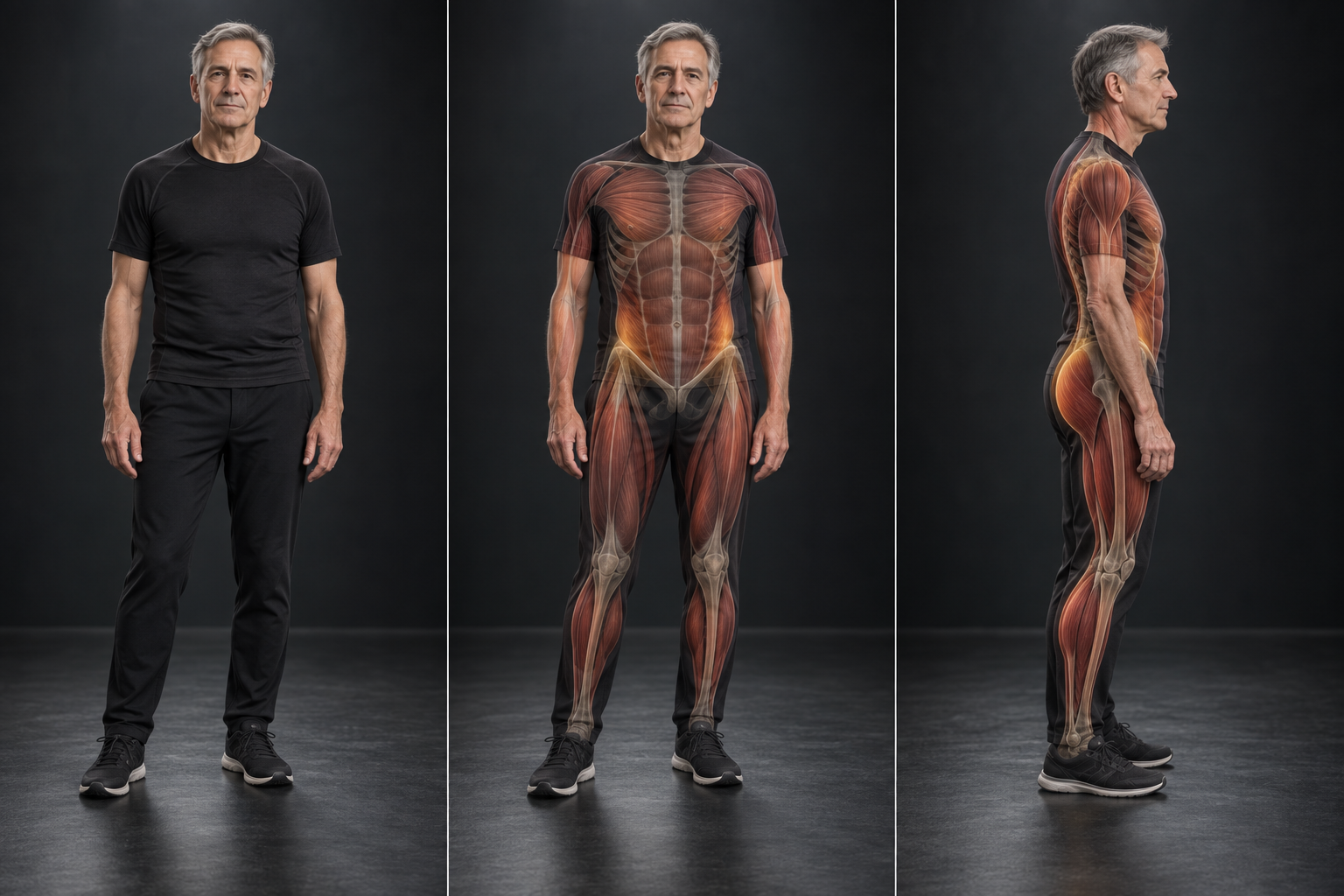
A practical way to look at it
Protection can become a movement pattern
Pain can begin for many reasons. When it persists, the body may protect itself by holding tension, limiting motion, or shifting pressure away from certain areas. Those strategies can gradually influence posture and gait.
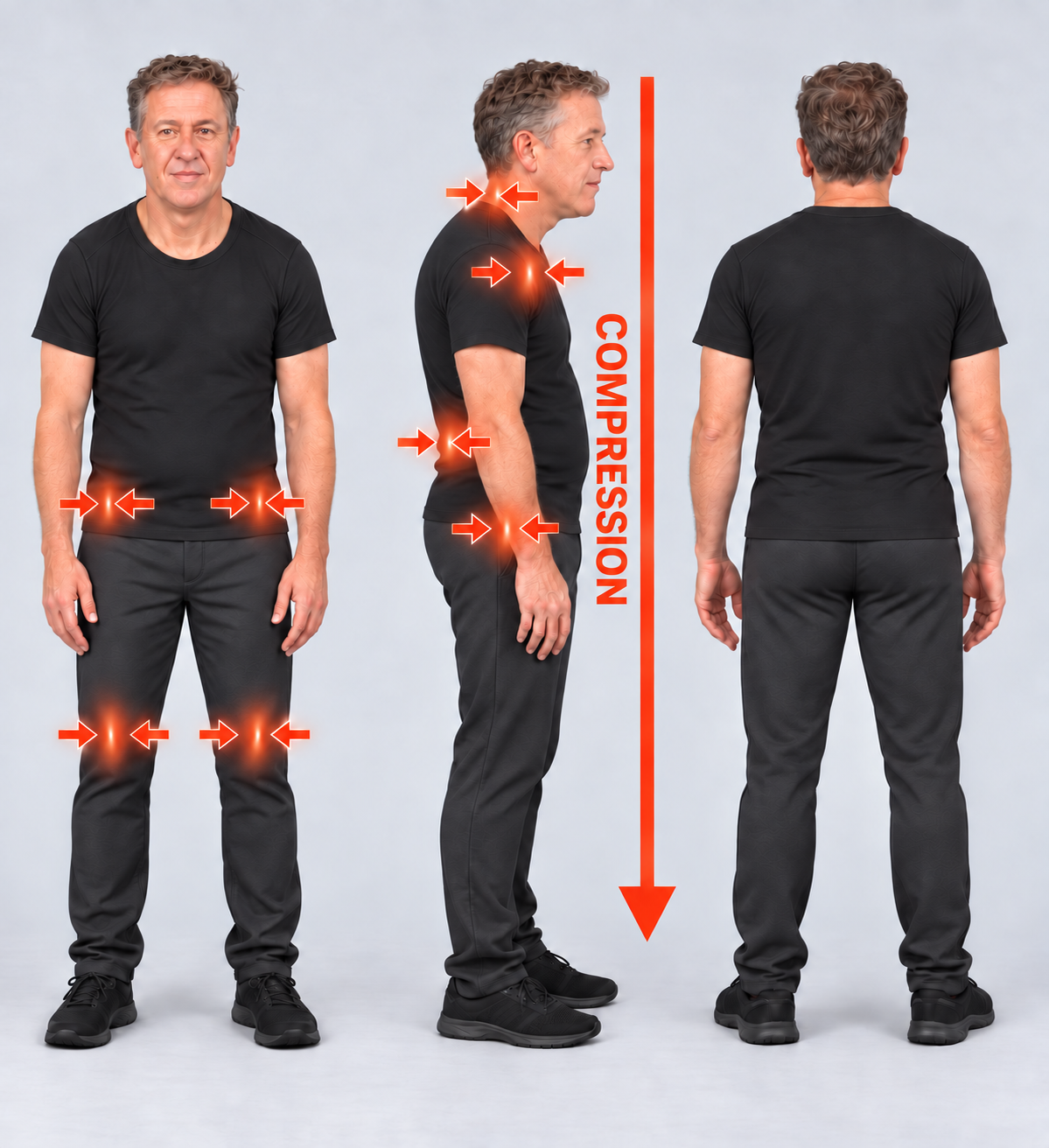
01 / COMPRESSION
The body begins to guard
Shoulders may round. The pelvis may tip forward. Weight may stop moving evenly through the feet and hips. The body is adapting, but the adaptation can reduce the number of comfortable ways you have to move.

02 / Create Space
Targeted release to tight areas
Self-myofascial release may help reduce guarding and improve access to movement. We target areas that appear to be limiting posture, ability to properly weight shift, or rotation.
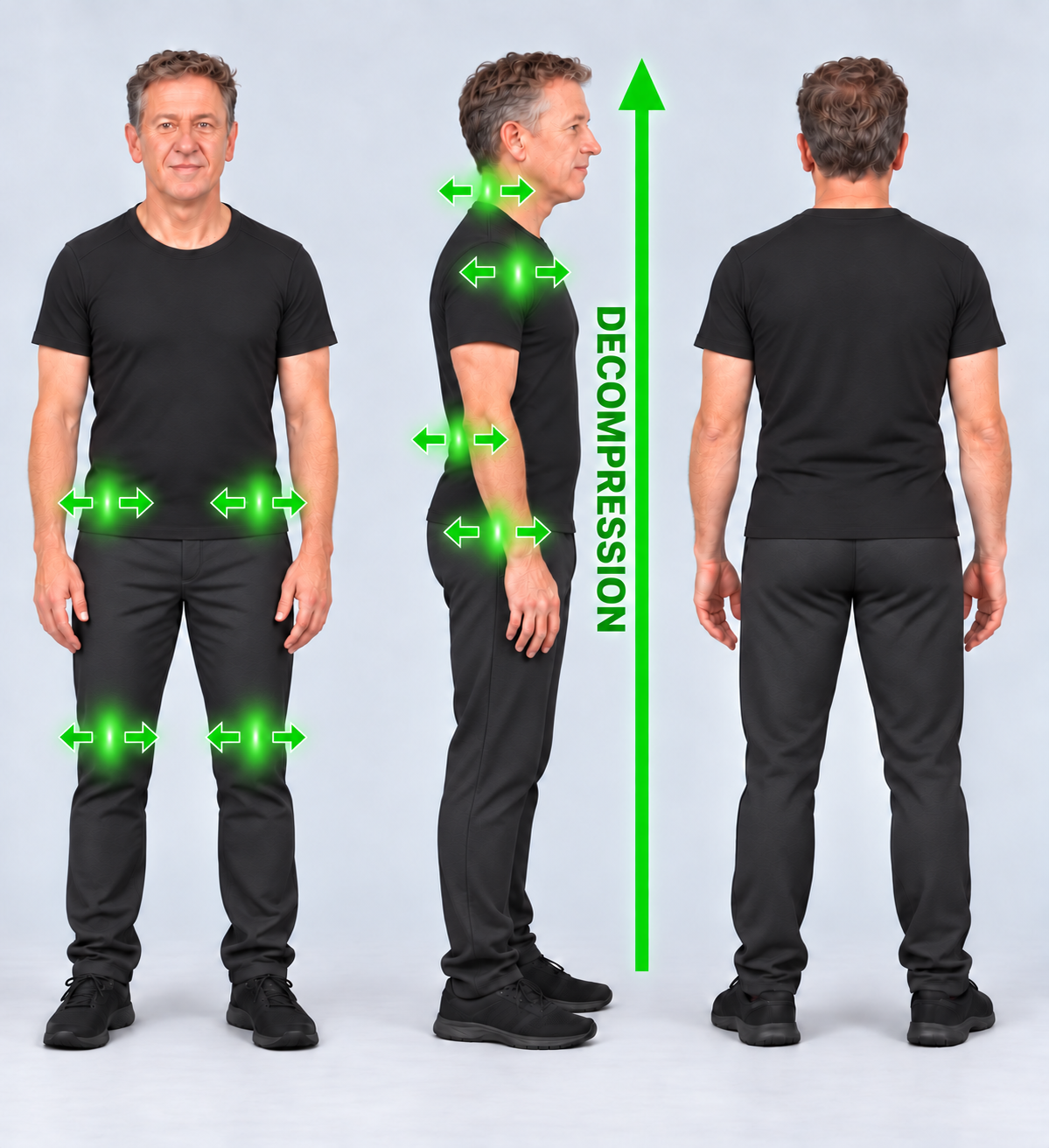
03 / DECOMPRESSION
Standing becomes less guarded
The next step is organizing the new movement in standing. We work toward a taller but relaxed posture, smoother weight transfer, and more room through the hips, ribs, shoulders, and low back.

04 / RECONNECT MOVEMENT
The exercise returns to walking/running
Walking requires the ribs and pelvis to rotate in coordination while the body shifts weight from one side to the other. A contralateral cable step press gives us a controlled way to practice that timing.
Persistent Pain & Movement Workshop
Learn how to rebuild movement capacity
This small-group workshop introduces the same progression shown above and helps you begin applying it to your own movement.
Understand protective posture and gait strategies
Learn targeted self-myofascial release
Explore weight shift and reciprocal movement
Beverly, Massachusetts. Workshop details will be sent directly to interested participants.